
This article introduces how to merge C and D drive in Windows Server 2012 R2/2016/2019/2022/2025 without losing data, and a better method to resize partitions instead of merging the C and D volumes.
Advantages of Combining the C and D Drives
To use disk space more efficiently and improve server performance, it's recommended to create at least one separate volume on the same disk in addition to the C drive. If you use only a single C drive and store everything on it, this can lead to many issues in the future. Conversely, creating more volumes on the same disk reduces the size of the C drive, making it more likely to run out of space.
Some people wonder if it is possible to merge the C and D drives without losing data, allowing the free space from D to be transferred to C. The answer is yes, it is possible. However, this is not the best solution if you want to extend C drive on Windows Server 2012. This article explains how to combine the C and D drives in Windows Server 2012 R2 and introduces a better method to extend the C drive by shrinking D.
How to Merge C and D Drive in Server 2012 R2
Download NIUBI Partition Editor, and you will see all connected disk partitions with their structure and other information on the right. Available operations for the selected disk or partition are listed on the left panel and can be accessed by right-clicking.
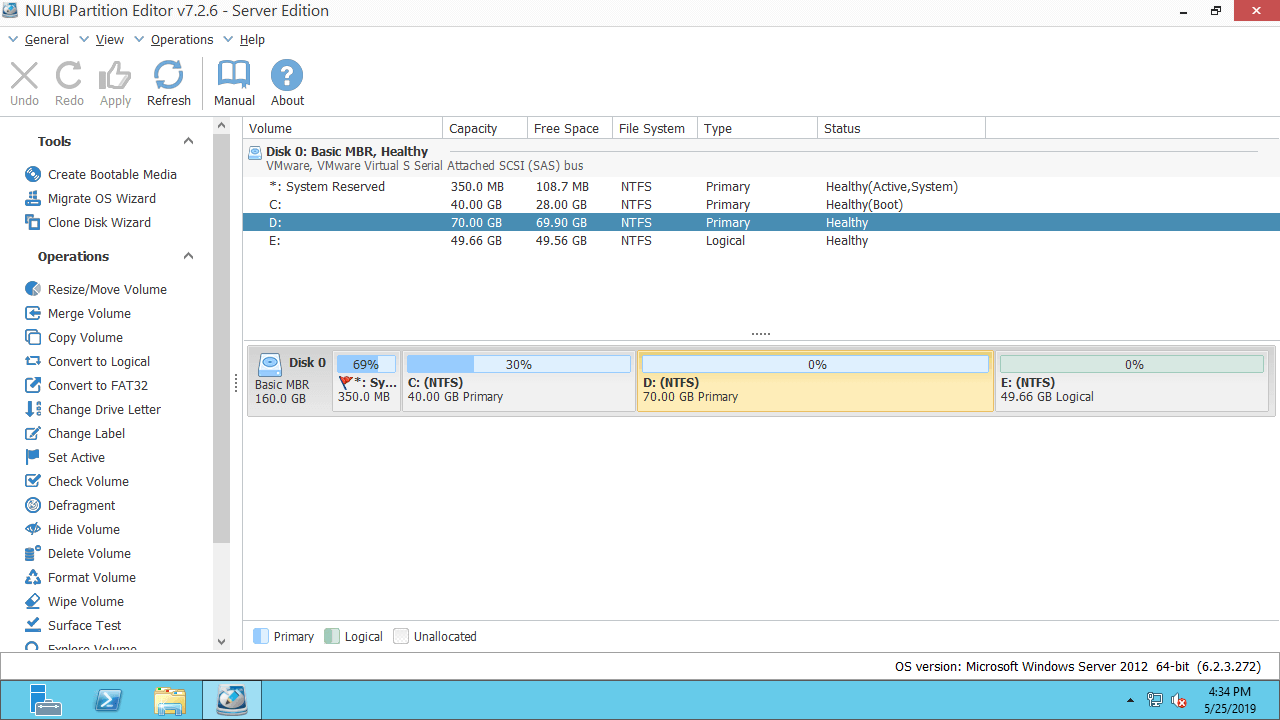
Steps to merge C and D drive in Windows Server 2012/2016/2019/2022:
Step 1: Right-click either partition C or D, and select 'Merge Volume'. Check the boxes next to both drives in the pop-up window.
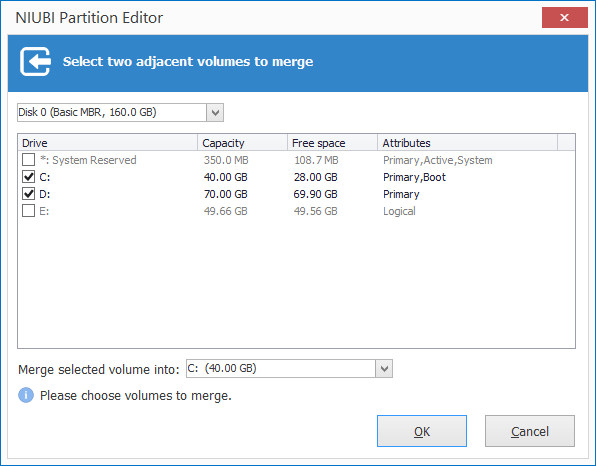
When merging the C and D volumes, you can only select C: as the destination drive. Because the C drive is where the Operating System is located, it cannot be deleted. Therefore, merging C into D is disabled.
After clicking 'OK', the program will return to the main window, where you will see that drive D is merged into C.
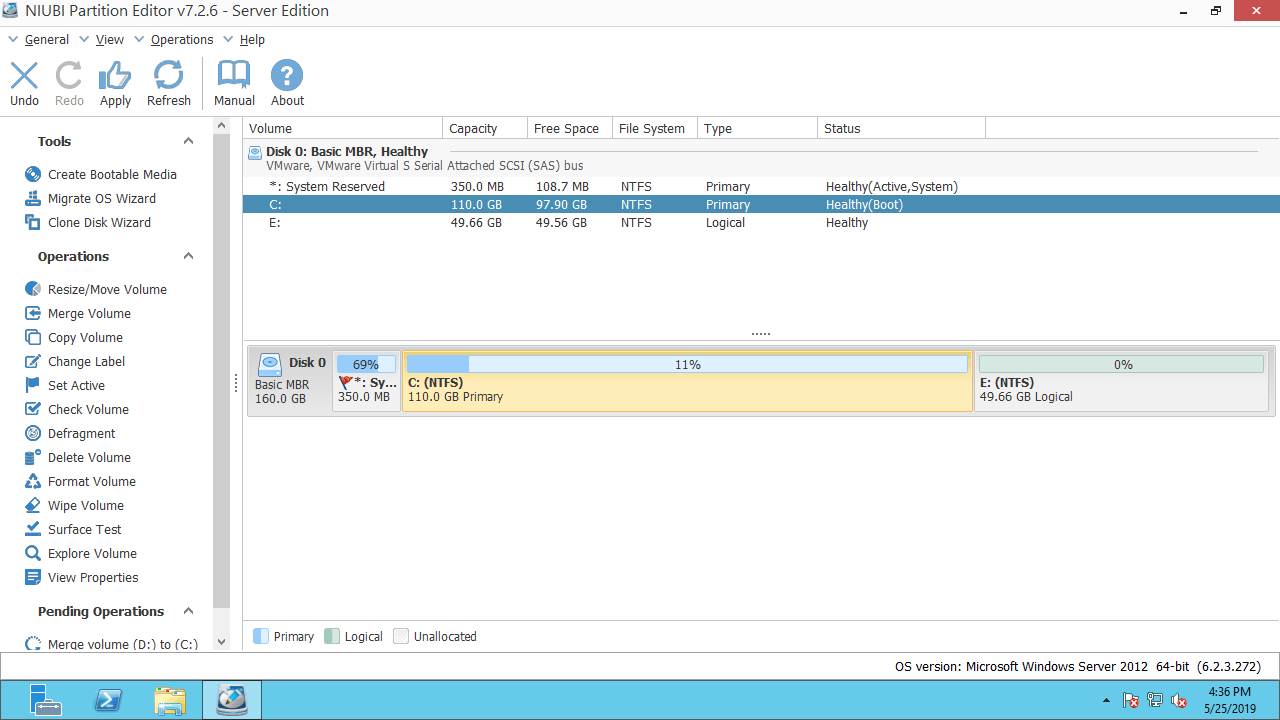
Step 2: Click 'Apply' on the top left to execute.
NIUBI Partition Editor is designed to work in its own virtual mode; only after clicking 'Apply' will the pending modifications take effect on the real disk partitions.
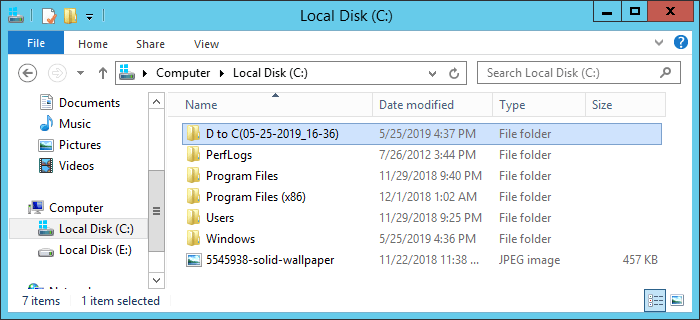
Open the C drive in Windows Explorer after the merging process is complete. You will see a new folder named "D to C (date and time)"; all files from the original D drive will be automatically moved into this folder.
Disadvantages of Merging the C and D Drives
It is easy to combine C and D drive in Windows Server 2012 R2 and other versions, but as you see, D drive will be deleted. This means all Windows services and applications installed on the D drive will become invalid, even though the files will be moved to the C drive.
The best idea is shrinking D to extend the C drive. This means releasing unused space from D and adding it into the C drive, so the D drive will not be deleted. The Operating System, programs, associated settings, and everything else remain the same as before. Watch the video how to do this:
Besides shrinking, extending and merging partitions in Windows Server 2012 and other versions, NIUBI Partition Editor can help you perform many other disk and partition management operations, such as creating, deleting, formatting, converting, defragging, copying, hiding, wiping, and scanning partitions, as well as initializing and setting read-only attributes to disks.
 © 2009 - NIUBI Technology All Rights Reserved. |