
Nowadays, hard disk sizes have become much larger. It is common to use 2TB to 4TB HDDs for personal computers, and RAID arrays could be over 10TB in a server. If you initialize a disk as MBR, you can use a maximum of 2TB of space and have at most 4 Primary partitions. If you want to have a partition larger than 2TB and more than 4 Primary partitions, you must change the MBR disk to GPT. Many people ask if it is possible to convert MBR to GPT without losing data. The answer is yes.
There are 3 ways to convert a disk from MBR to GPT in Windows PCs and Servers. Disk Management has a "Convert to GPT Disk" option, but you must delete all partitions on this disk first. To convert an MBR disk to GPT without deleting partitions or losing any data, you need to run the mbr2gpt.exe command or third-party software. This article introduces all these methods to convert MBR to GPT in Windows 11/10/8/7 and Server 2008/2012/2016/2019/2022/2025.
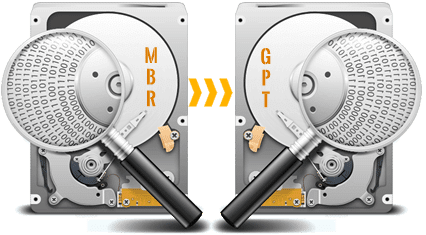
How to Identify if the Disk Is MBR or GPT
There are two ways to identify the disk type: using the built-in Disk Management or third-party software. Every disk is marked as MBR or GPT by NIUBI Partition Editor; after starting it, you will see the disk type immediately and clearly.
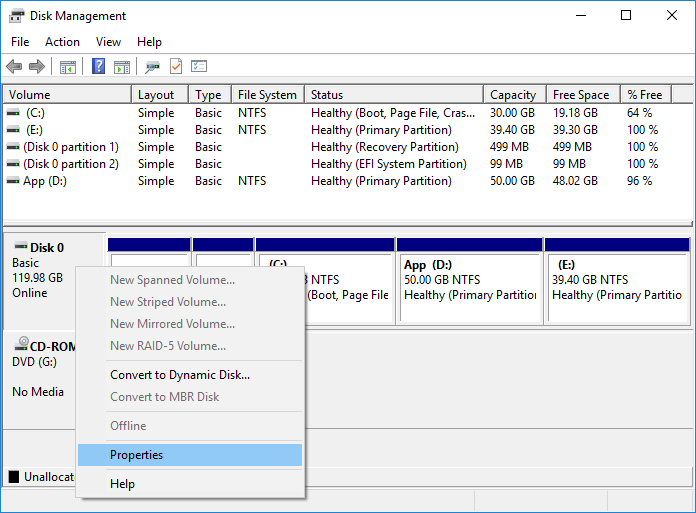
In Disk Management:
1. Right-click the leftmost area of a disk and select Properties:
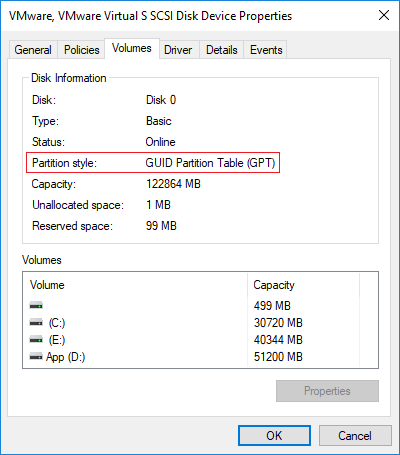
2. Switch to the Volumes tab in the pop-up window.
How to Convert a System Disk from MBR to GPT Without Data Loss
Some third-party software has the option to convert a system disk from MBR to GPT, but few can ensure that the system will be 100% bootable. To convert an MBR system disk to GPT, it is suggested to run MBR2GPT, which is provided by Microsoft. If you want to convert a data-only disk to GPT, jump to the next section. MBR2GPT cannot convert a data disk from MBR to GPT.
MBR2GPT is a command-prompt tool. It has been included since Windows 10 (1703) and subsequent versions. To convert MBR to GPT in Windows 10/11 and Server 2019/2022/2025, you can accomplish this in Windows from CMD. To convert MBR to GPT in Windows Server 2008/2012/2016, you need bootable media with the Windows Preinstallation Environment (Windows PE).
No matter which Windows version you are using, before changing MBR to GPT with the MBR2GPT command, your disk partition layout must meet the requirements below:
- There are no more than 3 partitions on the disk, and all partitions must be Primary.
- One of the partitions is set as "Active" and is the system partition.
- The volume IDs can be retrieved for each volume that has a drive letter assigned.
- All partitions on this MBR disk are supported by Windows, such as FAT32 or NTFS.
If your partition layout does not meet the requirements, you can make modifications with NIUBI Partition Editor.
Common Issues and Corresponding Solutions
"Validating layout, disk sector size is: 512 bytes Disk layout validating failed for disk 0", "MBR2GPT: Conversion failed". This is the most common error message while converting an MBR disk to GPT. If you receive such an error, check your disk partition configuration again.
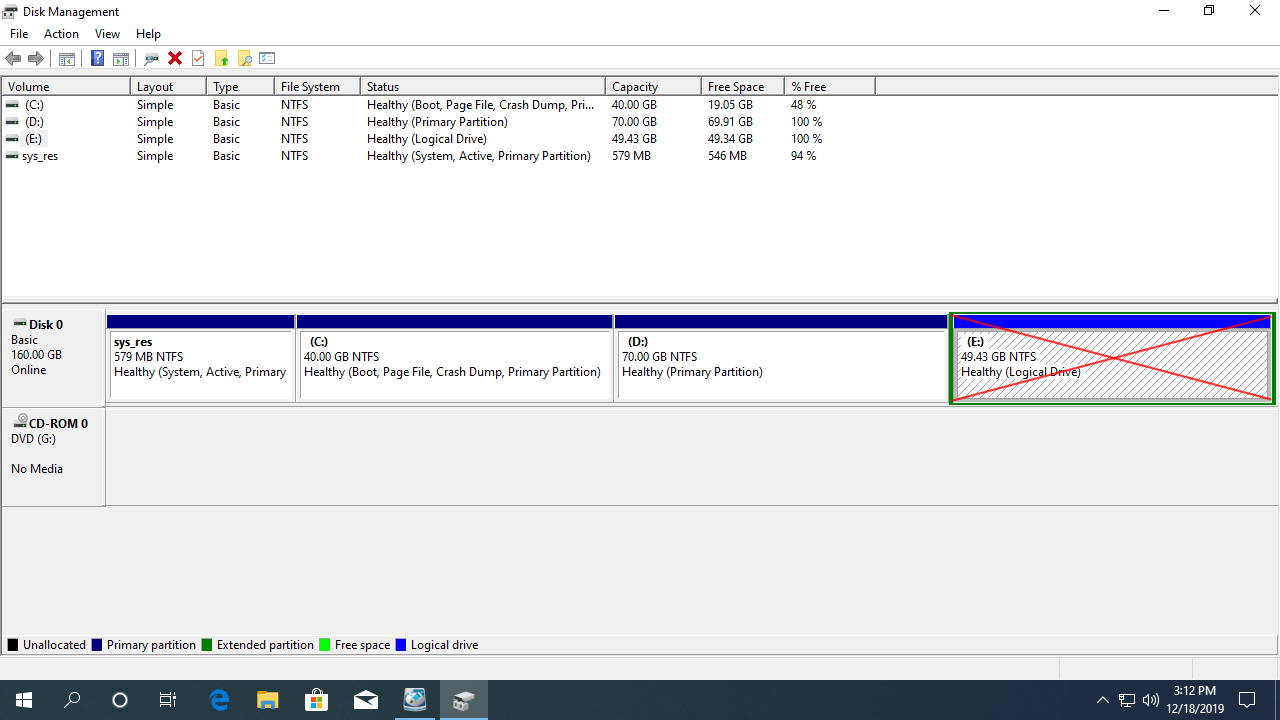
On most system disks, there is a System Reserved partition, a C: drive (for the OS), and a D: drive. If all these 3 partitions are Primary, you can convert this disk successfully.
- If there is a Logical drive on this disk, follow the step to convert it to Primary (without data loss).
- If there is a fourth partition such as E, move it to another disk, no matter whether it is Primary or Logical.
- If there are unsupported partitions such as EXT2/EXT3, move the files to another place and delete these partitions.
1. Convert a System MBR Disk to GPT in Windows
Applies to: Windows 10 (1703 and subsequent versions), Windows 11, Windows Server 2019, and Windows Server 2022/2025
If you do not know your Windows 10 version, press Windows and R together on the keyboard, type "winver", and press "Enter".
How to convert MBR to GPT in Windows 10/11 and Windows Server 2019/2022/2025:
- Click the Windows logo on the bottom left, type cmd, and select Run as administrator.
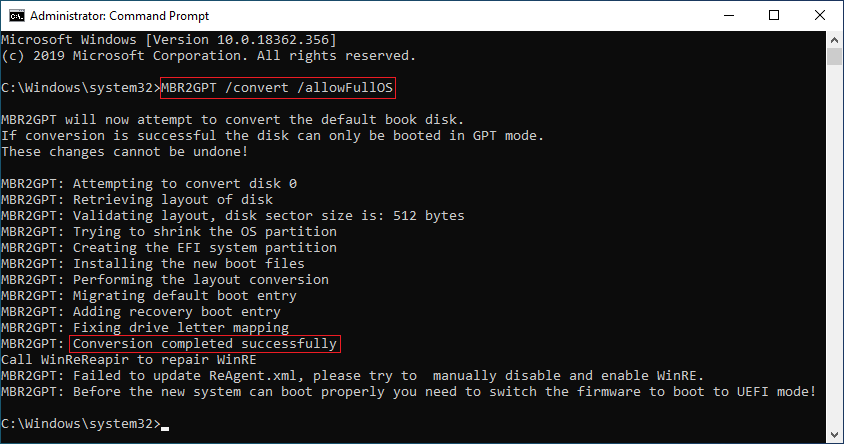
- In the command prompt window, type MBR2GPT /convert /allowFullOS and press Enter.
Note: This conversion cannot be undone, so before doing this, make sure your computer can boot from UEFI.
2. Convert a System Disk from MBR to GPT with Bootable Media
Applies to: Windows Server 2016, Windows Server 2012 (R2), and Windows Server 2008 (R2).
The MBR2GPT command is not integrated into these versions. You cannot convert MBR to GPT directly in Windows, but you can accomplish this via bootable media.
How to convert MBR to GPT in Windows Server 2008/2012/2016:
- Download the Windows Server 2019 ISO file from Microsoft, then create a bootable DVD or USB flash drive with a Windows built-in or third-party tool.
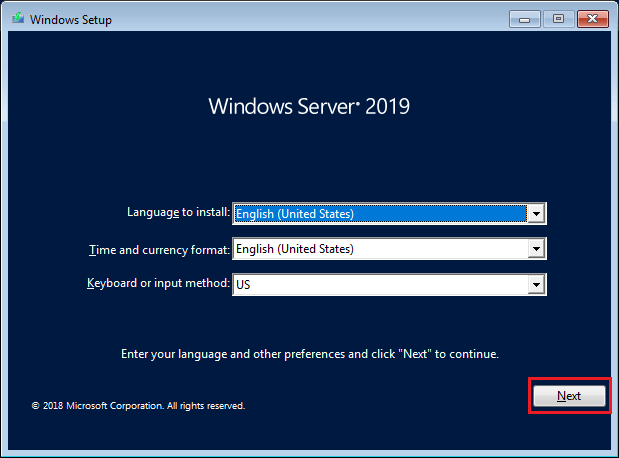
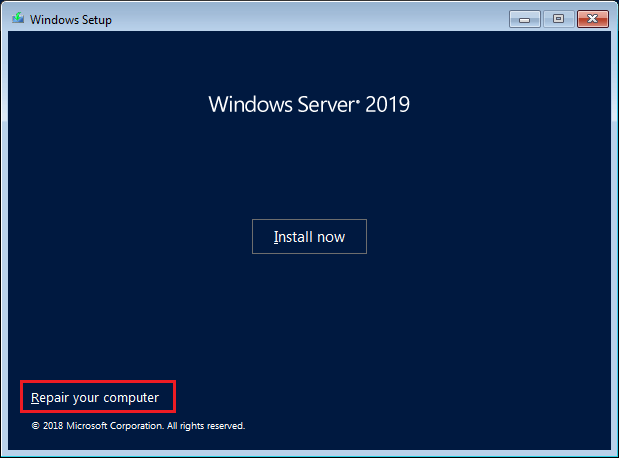
- Boot from this bootable media, simply click "Next" in the first Windows Setup window, then click "Repair your computer" on the bottom left corner of the next window.
![Setup window]()
![Repair computer]()
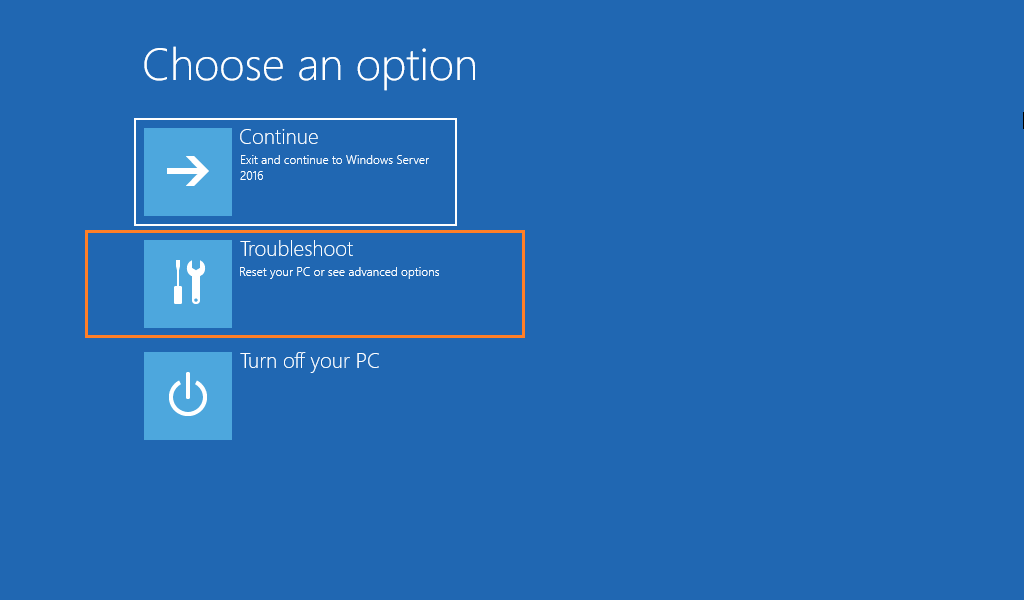
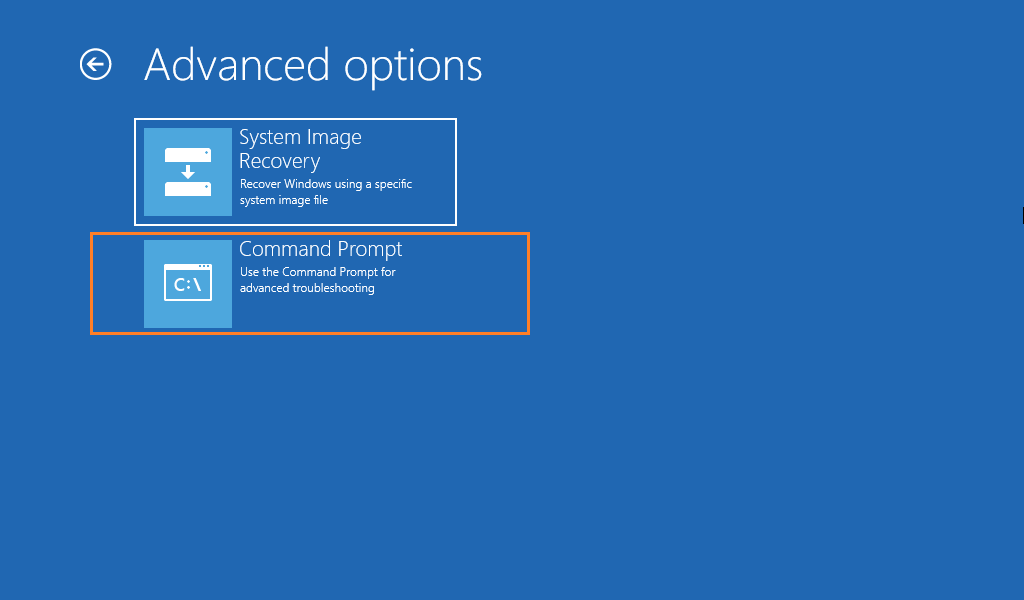
- Click Troubleshoot in the next window, then click Command Prompt.
![Troubleshoot]()
![Command Prompt]()
- In the command prompt window, type cd.. and press Enter, then type MBR2GPT /convert and press Enter.
How to Convert an MBR Disk to GPT Without an Operating System
For a data-only disk, it is extremely easy to convert MBR to GPT without losing data. NIUBI Partition Editor can convert the disk type via several clicks.
How to convert MBR to GPT in Windows 11/10/8/7 with a free converter:
- Download NIUBI Partition Editor Free Edition, right-click the leftmost area of the MBR disk, and select "Convert to GPT Disk".
- Simply click "Yes" in the pop-up window to confirm, and a pending operation will be added.
- Click "Apply" on the top left to execute, and you are done. (All operations before clicking Apply only work in virtual mode.)
Watch the video to see how to convert an MBR disk to GPT without losing data:
To convert a data disk from MBR to GPT in Windows Server 2008/2012/2016/2019/2022/2025, the steps are the same, but you need the Server Edition. Besides converting MBR to GPT, NIUBI Partition Editor helps you convert partitions between Primary and Logical, and convert NTFS to FAT32 without losing data. It also helps you shrink, extend, move, and merge partitions to optimize disk space usage, and clone a disk partition to migrate the operating system and data. You can also defrag, wipe, and hide partitions, and much more.
 © 2009 - NIUBI Technology All Rights Reserved. |